Invasive plant species are a serious issue threatening Ottawa's biodiversity and ecosystems. Invasive plant species are classified as non-native plants that have been introduced, whether intentionally or unintentionally, from other geographical regions that outcompete native vegetation.
Invasive species are problematic not just because they outcompete native plants, but because native wildlife - including pollinator insects and birds - do not naturally use them for food and habitat. Since native wildlife evolved to feed off plants that naturally grow in this region, non-natives that have only been introduced relatively recently do not provide the same nutritional value or key characteristics that many wildlife species need to thrive. This threatens the stability of our ecosystem and further endangers at-risk species, such as Bumble Bees and the Monarch butterfly.
On Friday June 27th, Erica Shardlow, the CAFES' Trees and Greenspace Coordinator, was pleased to attend an excellent walk with members of the Ottawa Field Naturalists Club (OFNC) and the Rideau Trail Association. Guide Alan Smith led the group on an informative hike through the Lime Kiln trail while pointing out invasive plants on the rise, some of which are featured below.
Phragmites are a major invasive in Ottawa, reproducing through roots and often seen spreading along waterways. It is being actively controlled in Ontario through conservation authorities, mainly by spraying, as infestations are often extensive. Research has begun to examine biological control methods via two species of moths whose larvae can damage and kill the plant.

Buckthorn is a massive concern due to its aggressive spreading. The two problematic species in Ottawa are Glossy Buckthorn and Common Buckthorn. They are native to Europe, northwest Africa and western Asia and have veiny leaves with round berries that are enjoyed by birds. Interestingly, the seeds in its berries pass through birds' digestive systems unharmed, allowing the seeds to spread widely and rapidly. Several community associations/organizations in Ottawa have been leaders in removing Buckthorn, including Friends of Hampton Park and Action Sandy Hill.

Dog Strangling Vine (DSV) is yet another huge concern due to its ability to spread rapidly and its difficulty to kill. DSV can grow to be 4-5 feet tall by mid-summer, suffocating understory plants and young trees. DSV is actually related to the milkweed family, at times confusing Monarchs who may lay eggs on its leaves, only for the caterpillars to be unable to feed on the plant after hatching. DSV is a priority species that is seeing active removal efforts by the City of Ottawa and Ontario conservation authorities.

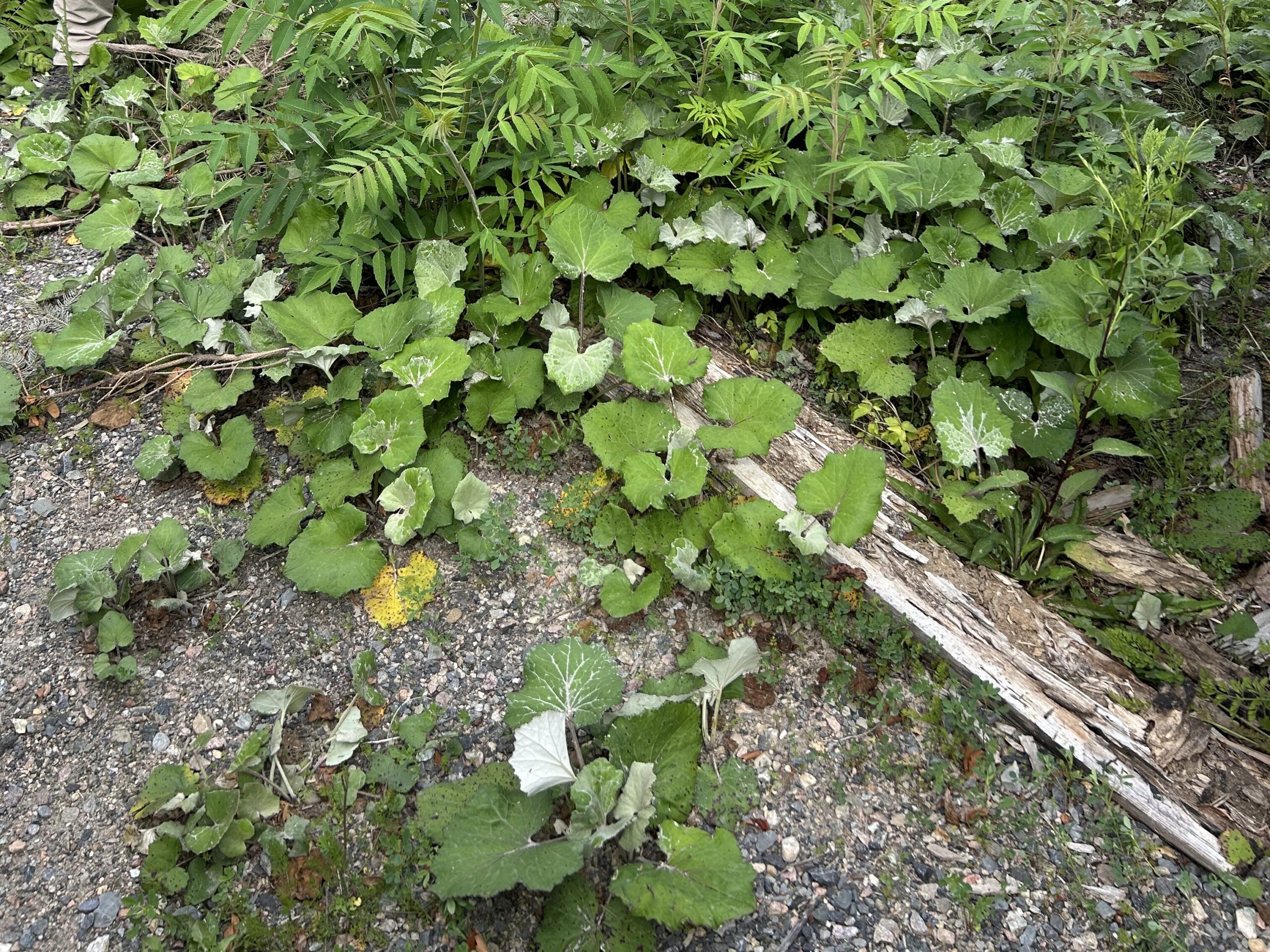
This photo below is of Coltsfoot, another invasive that loves gravel and stony areas and is often seen at the edges of car parks. These plants have bright yellow flowers that resemble dandelions. They are native to Europe, and were likely cultivated by settlers for medicinal properties to treat cold, flu, gout, fever and respiratory illness.
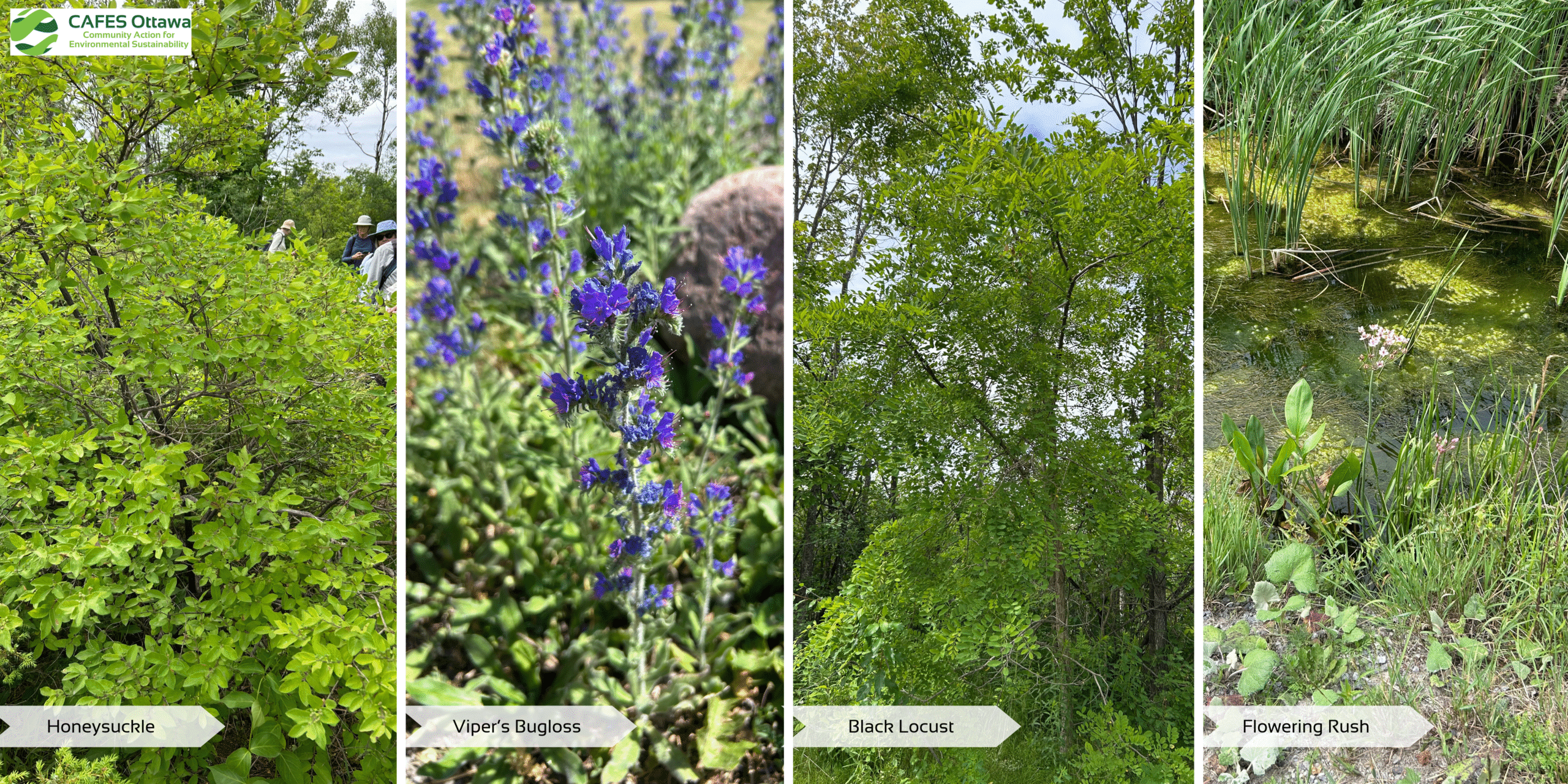
Check out the photos below for some of the other invasives we came across on the walk. Other invasives not seen on the trail but discussed on Friday included Norway Maple, Garlic Mustard, Goutweed, Periwinkle, Russian Olive, Wild Parsnip, Japanese Knotweed, and Giant Hogweed.
Many of these species were introduced by European settlers, and many more continue to be spread as a result of globalization and transportation of goods. Invasives can also be spread by everyday human activities - like hitching a ride on the bottom of our hiking boots or by transporting fire wood when we go camping. Boot cleaning stations at trailheads - which include boot brushes to remove mud, seeds and brush, complete with informative signage - are gaining traction in Ontario as one way to minimize spread.
Many community organizations in the CAFES network are actively engaged in invasive species awareness, advocacy and removal - pushing for more community/volunteer stewardship opportunities with the City of Ottawa.
In fact, CAFES is once again partnering with Carleton University for our annual Community Engagement project, and our topic this year is on invasive plant species! If you are from a Community Association and interested in learning more / sharing your knowledge, consider participating - see here for info.
Also be sure to check out the Ontario Invasive Plant Council for a comprehensive species list and in-depth guides on how to remove key species. You can also find information on what's being done, and what you can do.