Did you know that CAFES network members can now connect with each other on our new Slack forum? If you're already a member and haven't joined, check your email for an invitation. If you're not a CAFES member but want to connect with like-minded Ottawa folks, consider signing up to be a member for access to our network communication platform Slack.
If you're not familiar with Slack, here are some tips and tricks for a smooth experience:
If you're having trouble joining Slack, please email info@cafesottawa.ca.
Every city park should have a pollinator meadow!
Wild Pollinator Partners (WPP) is partnering with the Ottawa Stewardship Council (OSC) to establish more pollinator habitat on city land - including parks, hydro corridors, and rights of way. If you or your community organization are near a city park or hydro corridor, WPP and OSC will help you create a wildflower meadow. OSC will handle the permission process, and WPP will provide advice, models, some polliantor plants, and lots of encouragement.
Your job as a project participant will be to:
This last step is not onerous - at Brighton Beach Park, Old Ottawa South's Environment and Climate Action Committee prunes shrubs in fall, digs out dandelions in spring (about 4 hours total), and maintains a mowing strip around the garden. Monitoring is important to see how various species are doing in your location and to stop invasive species early. Visit the link here to read about these two mini-meadows at Brighton.
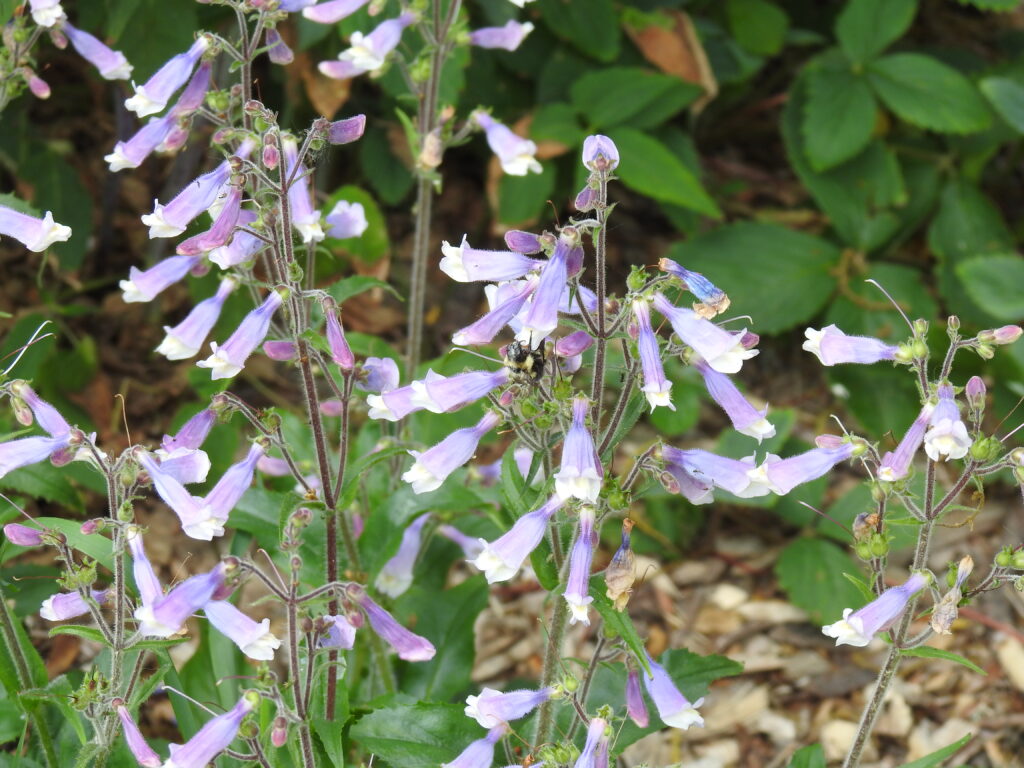
WPP and OSC already have several individuals/groups who are interested in starting a pollinator mini-meadow as part of this project, but are looking for a few more to join. If you or your organization is interested, please reach out to info@wildpollinators-pollinisateurssauvages.ca
See the document below for a complete project description.
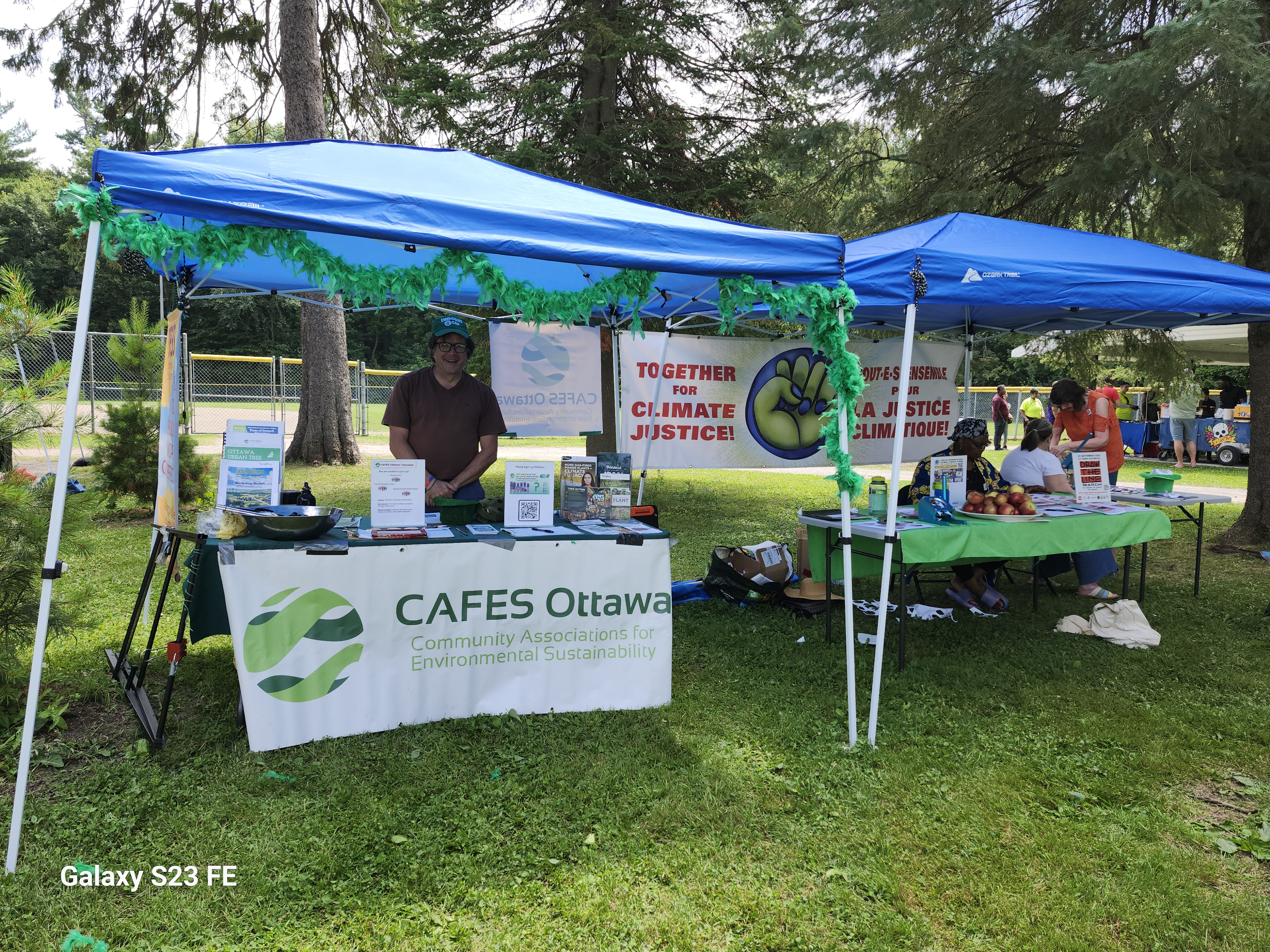
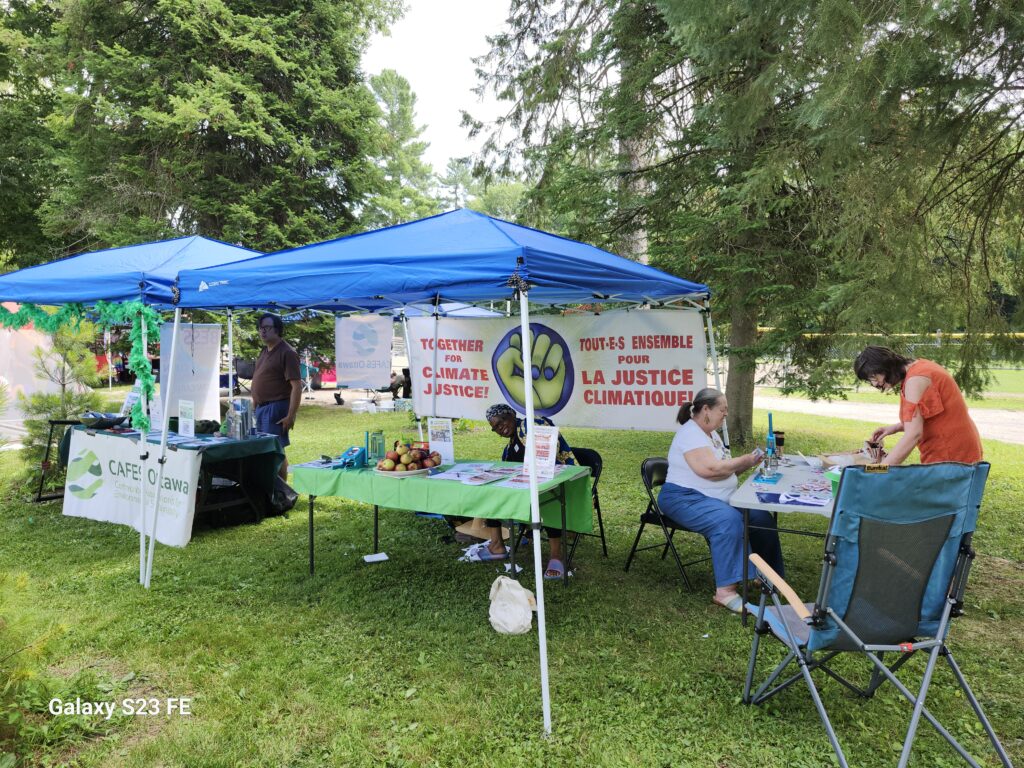
CAFES was thrilled to table at West Side Pride in Stittsville on Saturday, July 19th. We had a wonderful time connecting with attendees and sharing more about the important work we do at CAFES. We especially enjoyed being able to connect with Carleton M.P. Bruce Fanjoy, as well as City of Ottawa Councillor Glen Gower.
Thank you to everyone involved in West Side Pride for organizing such a beautiful community event!
Exciting! CAFES will be launching a Slack forum for our internal communications between CAFES network members this week! Keep an eye on your email for further information.
This will allow members of the CAFES network to exchange information, post interesting resources, and event debate issues!
Slack is a business messaging platform which can be used on a browser or downloaded as a phone or desktop app. The forum will be divided into different channels which members can join based on their specific interests. The CAFES Slack forum will replace the current Forum on our website, which we'll be phasing out over the next month.
We look forward to connecting with you on this new platform!
Invasive plant species are a serious issue threatening Ottawa's biodiversity and ecosystems. Invasive plant species are classified as non-native plants that have been introduced, whether intentionally or unintentionally, from other geographical regions that outcompete native vegetation.
Invasive species are problematic not just because they outcompete native plants, but because native wildlife - including pollinator insects and birds - do not naturally use them for food and habitat. Since native wildlife evolved to feed off plants that naturally grow in this region, non-natives that have only been introduced relatively recently do not provide the same nutritional value or key characteristics that many wildlife species need to thrive. This threatens the stability of our ecosystem and further endangers at-risk species, such as Bumble Bees and the Monarch butterfly.
On Friday June 27th, Erica Shardlow, the CAFES' Trees and Greenspace Coordinator, was pleased to attend an excellent walk with members of the Ottawa Field Naturalists Club (OFNC) and the Rideau Trail Association. Guide Alan Smith led the group on an informative hike through the Lime Kiln trail while pointing out invasive plants on the rise, some of which are featured below.
Phragmites are a major invasive in Ottawa, reproducing through roots and often seen spreading along waterways. It is being actively controlled in Ontario through conservation authorities, mainly by spraying, as infestations are often extensive. Research has begun to examine biological control methods via two species of moths whose larvae can damage and kill the plant.

Buckthorn is a massive concern due to its aggressive spreading. The two problematic species in Ottawa are Glossy Buckthorn and Common Buckthorn. They are native to Europe, northwest Africa and western Asia and have veiny leaves with round berries that are enjoyed by birds. Interestingly, the seeds in its berries pass through birds' digestive systems unharmed, allowing the seeds to spread widely and rapidly. Several community associations/organizations in Ottawa have been leaders in removing Buckthorn, including Friends of Hampton Park and Action Sandy Hill.

Dog Strangling Vine (DSV) is yet another huge concern due to its ability to spread rapidly and its difficulty to kill. DSV can grow to be 4-5 feet tall by mid-summer, suffocating understory plants and young trees. DSV is actually related to the milkweed family, at times confusing Monarchs who may lay eggs on its leaves, only for the caterpillars to be unable to feed on the plant after hatching. DSV is a priority species that is seeing active removal efforts by the City of Ottawa and Ontario conservation authorities.

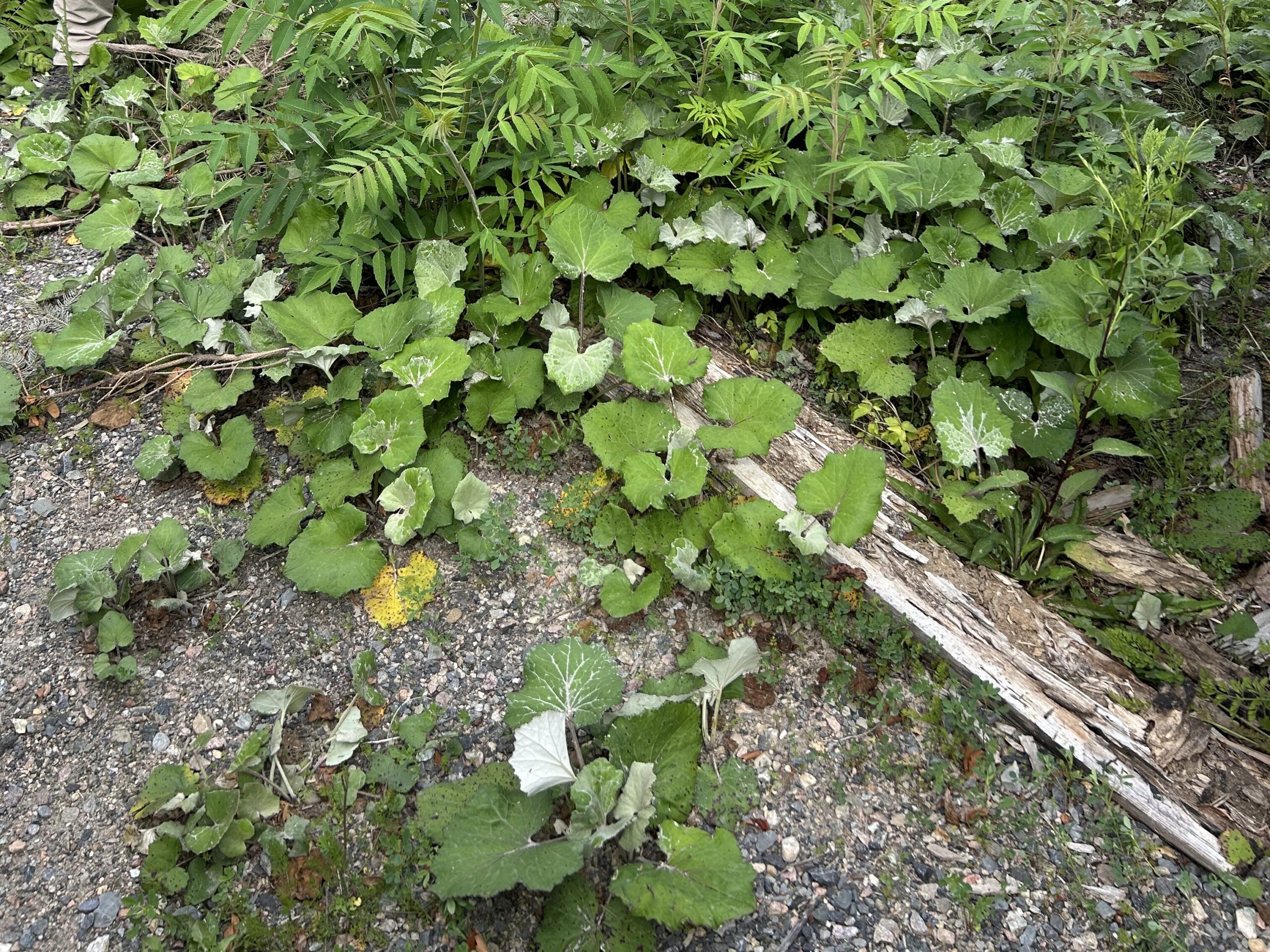
This photo below is of Coltsfoot, another invasive that loves gravel and stony areas and is often seen at the edges of car parks. These plants have bright yellow flowers that resemble dandelions. They are native to Europe, and were likely cultivated by settlers for medicinal properties to treat cold, flu, gout, fever and respiratory illness.
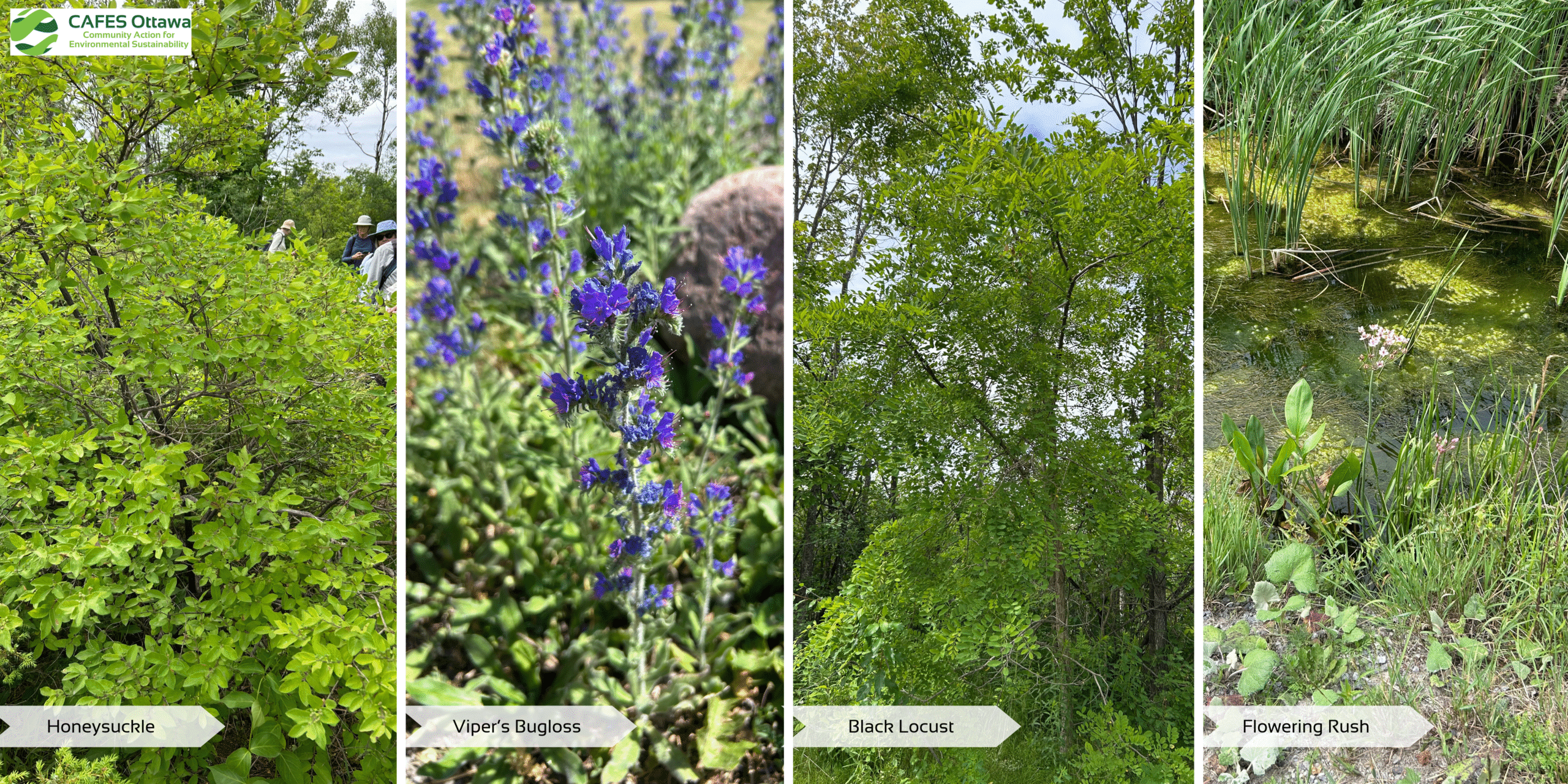
Check out the photos below for some of the other invasives we came across on the walk. Other invasives not seen on the trail but discussed on Friday included Norway Maple, Garlic Mustard, Goutweed, Periwinkle, Russian Olive, Wild Parsnip, Japanese Knotweed, and Giant Hogweed.
Many of these species were introduced by European settlers, and many more continue to be spread as a result of globalization and transportation of goods. Invasives can also be spread by everyday human activities - like hitching a ride on the bottom of our hiking boots or by transporting fire wood when we go camping. Boot cleaning stations at trailheads - which include boot brushes to remove mud, seeds and brush, complete with informative signage - are gaining traction in Ontario as one way to minimize spread.
Many community organizations in the CAFES network are actively engaged in invasive species awareness, advocacy and removal - pushing for more community/volunteer stewardship opportunities with the City of Ottawa.
In fact, CAFES is once again partnering with Carleton University for our annual Community Engagement project, and our topic this year is on invasive plant species! If you are from a Community Association and interested in learning more / sharing your knowledge, consider participating - see here for info.
Also be sure to check out the Ontario Invasive Plant Council for a comprehensive species list and in-depth guides on how to remove key species. You can also find information on what's being done, and what you can do.
Come on out on Tuesday, July 1st from 9am - 2pm for Chief Pinesi Day in Edinburgh Park!
This event will be the culmination of an incredible 8-day paddle from Deep River to Ottawa that will retrace Chief Pinesi's traditional hunting grounds. There will be a sacred fire at 9am, a smudging ceremony at noon, followed by a wonderful afternoon of drumming, dancing, singing, and a land tour of the Chief Pinesi Portage Trail. This event is being organized and supported by the Algonquins of Pikwakanagin First Nation, Kichi Sibi Trails, the New Edinburgh Community Alliance, the Chrichton Community Council and the City of Ottawa.
Chief Pinesi (1768-1834) was the Grand Chief of the Algonquins during the time Europeans began establishing settlements in the Algonquin territory. Prior to European settlement, Chief Pinesi's hunting grounds were covered by forests, and his people would travel by canoe in summer. As he witnessed settler deforestation, logging, farming, destruction of wildlife, and the creation of the dam and the Rideau Canal, he dedicated his life to fighting for recognition of Algonquin rights to the traditional land.
CAFES is excited to be in attendance at this important event on July 1st. We will be there with one of our community partners selling White Pine tree seedlings - an important native species for the Algonquin Territory. Be sure to stop by.
Visit the Facebook page here for more information.

On Sunday May 4th, in partnership with the Riverview Park Community Association and with funding contribution from TD Friends of the Environment Foundation, CAFES Ottawa saw an incredible turn out of over 60 attendees on our Tree Walk in Coronation Park as part of the annual Jane’s Walk initiative!
Tree expert Owen Clarkin lead the beautiful 1km walk to share his in-depth knowledge on native tree species, identification, the importance of trees and urban forests, tree health, and much much more.
The Coronation Park woodlot has a wonderful diversity of tree species and was a lovely spot to get outside and enjoy some spring fresh air with fellow neighbours. At the end of the walk, Shelley Crabtree, Director of Forêt Capitale Forest, provided an excellent planting demonstration of a Pin Cherry tree to share best practices for planting, watering and caring for young trees.
Thank you to all for joining us for such an invigorating morning, and a special thank you to Sharron Edwards for coming out to photograph our walk!
-

-